Where Is the Economy Now? — Q1 2026
As we close out the first quarter of 2026, the widening conflict in the Middle East and its implications for the global oil market are added threats for faster inflation and slower economic growth in the year ahead. Hiring remains weak and higher gasoline prices could dent the expected boost to incomes from larger tax refunds. Volatility within financial markets has spiked while the Fed is on track to pause again in March to assess the impacts of the latest geopolitical tensions.
Current state: Slower End to 2025 Than Expected
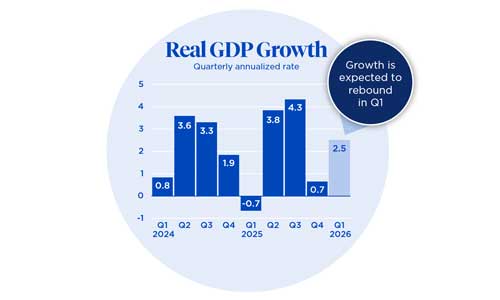
Annualized real GDP growth was only 0.7% in Q4 as the federal government shutdown and trade weighed more on the economy than expected.
Core GDP growth (excluding government, inventories and net trade) remained solid, up 1.9%, led by still-buoyant consumer spending and AI investment and build out by businesses.
The government shutdown and trade losses from Q4 should be reversed in Q1, helping to boost growth to 2.5%. We expect larger tax refunds to help offset any negative drag on consumer activity from higher gasoline prices caused by the Iran conflict.
Overall, we maintain our view that the economy will continue to show constructive trends over 2026, supported by stimulus efforts and improved business investment. However, the downside risks have increased due to the Iran conflict, and we now project slower economic growth in Q2 as a result.
Employment: Hiring Softened in February
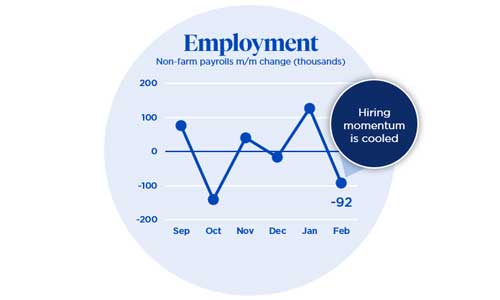
February’s jobs report surprised to the downside, with employment losses that were weaker than expected, even after accounting for weather and a nurses’ strike. This signals a broader cooling in labor market momentum, particularly within the private sector, following January’s strong gains.
The three-month moving average in private job gains fell to a modest 18,000 in February, suggesting the labor market was losing steam ahead of the Iranian conflict and raising the risk that extended disruptions could stress hiring activity going forward.
Inflation: Was Cool Ahead of Iran Conflict
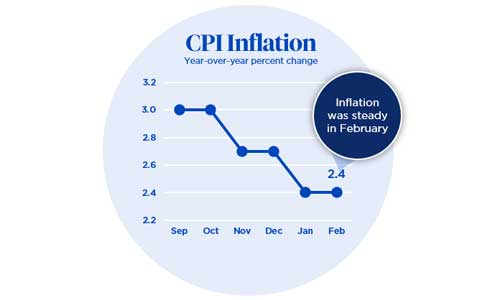
February’s CPI report showed inflation was subdued before geopolitical developments emerged in the Middle East. The headline and core measures were broadly in line with expectations and consistent with the pre-conflict view of continued cooler inflation trends early in 2026.
While the February data reinforce that inflation pressures were easing heading into the conflict, surging energy prices and supply disruptions now pose a clear upside risk to inflation in coming months, even if the shock ultimately proves short-lived.
The Markets: Equities Lose Steam
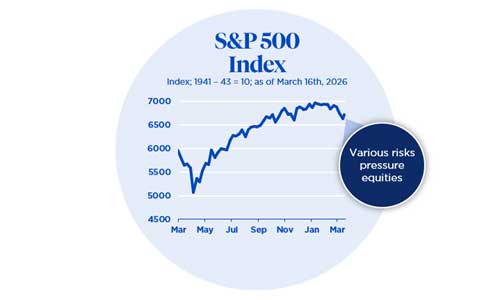
The outbreak of the Iranian conflict is spurring a modest pullback in benchmark equity indices and greater volatility. This comes amid meaningful churn in the market as concerns over AI disruption, private credit and tariffs weigh on investors’ views. Even so, it’s notable the S&P 500® Index remains not far below its historic highs.
Downside risks to the outlook have increased as companies will likely face challenges from higher input costs, supply chain disruptions and weaker sentiment. At the same time, we shouldn’t forget that fiscal stimulus, a positive corporate outlook and other tailwinds should mitigate headwinds from the conflict.
Energy: Prices Jump
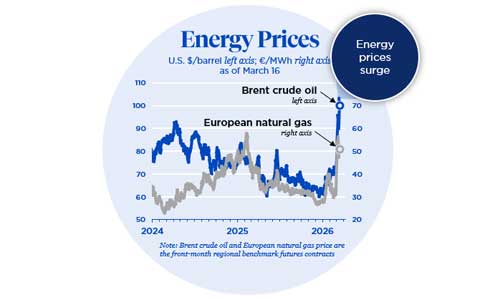
Oil and natural gas prices have swung wildly since the start of conflict with Iran. At the time of writing, Brent crude oil is trading 40% above its pre-conflict level. European and Asian natural gas prices have surged more than U.S. prices since they rely heavily on energy from the Middle East. Financial conditions are now much less accommodative.
Negative ripple effects from less loose financial markets threaten to exacerbate impacts from higher energy prices, supply chain disruptions and deteriorating sentiment. Notably, the U.S. oil market is more exposed than its natural gas market since the latter is less globally connected. U.S. domestic natural gas prices have risen less than 10%.
To find more information about the state of the economy, listen to Economic Insights By Nationwide wherever you listen to podcasts.
Keep up with the momentum that's happening in and around Greater Des Moines (DSM) when you subscribe to one or all of the Greater Des Moines Partnership's newsletters — they're packed with the latest news, highlighting everything from upcoming events to development projects to policy updates. Join the mailing list to connect with The Partnership and help amplify stories from around the region.